
In This Article
His Story
In the spring of 1777, Jacob Robbins entered the Continental Army as a musician. He was approximately fifteen or sixteen years old, an age when many boys were still learning a trade or working alongside their families. Instead, Robbins entered an army fighting for American independence.
His instrument was a drum. In the eighteenth-century military, drums were more than musical instruments. They were tools of communication, used to transmit orders, organize troops, regulate daily routines, and coordinate movement.
Robbins enlisted in April 1777 for a term of three years. He served under Captain William Hudson Ballard in a Massachusetts regiment commanded by Colonel Ichabod Alden.
His pension testimony placed him in the northern campaign that ended with the surrender of British General John Burgoyne at Saratoga. He also specifically identified the Battle of Stillwater, one of the decisive engagements of 1777.
The surrender of Burgoyne’s army became a turning point in the American Revolution. It demonstrated that American forces could defeat a major British field army and helped convince France to enter the war openly as an ally of the United States.
Robbins survived the war and eventually returned to civilian life in Massachusetts. But the independence he helped secure did not guarantee him financial security.
By 1819, more than forty years after his enlistment, local officials in Carlisle, Massachusetts, identified Robbins as an indigent Revolutionary War veteran.
His 1820 pension papers reveal the extent of his hardship. His recorded possessions, excluding necessary clothing and bedding, were valued at just $6.33.
Among those possessions was a drum valued at five dollars.
The record does not establish whether this was the same drum he had carried during the Revolution. Nevertheless, the presence of the instrument among his few possessions creates a striking connection between his military service and his later years.
Jacob Robbins’s surviving pension records tell two stories: the experience of a young Continental Army drummer during the struggle for independence, and the difficult circumstances of an aging veteran seeking assistance from the nation he had served.
Early Life in Massachusetts
Jacob Robbins was born approximately 1761 or 1762, based on the ages he reported in his pension declarations.
In April 1818, he described himself as fifty-six years old. In 1820, he reported being fifty-eight.
These statements are consistent with a birth around 1761–1762, although they do not establish an exact date.
His birthplace and parents have not been identified in the available pension transcriptions.
Robbins was associated with Westford, Massachusetts, in connection with his Revolutionary War service.
Westford was a Middlesex County community whose residents participated in the political and military upheavals of the American Revolution.
Massachusetts communities supplied large numbers of soldiers to the Continental Army, including young men who served as infantrymen, musicians, and other military personnel.
Without a confirmed birth or baptismal record, however, it would be premature to assign Robbins to a particular family simply because other individuals with the Robbins surname lived in the region.
Enlistment in the Continental Army
On April 7, 1818, Jacob Robbins appeared before a Massachusetts court and provided a sworn declaration concerning his Revolutionary War service.
He stated that he had enlisted in April 1777 as a musician for a term of three years.
His company was commanded by Captain William Hudson Ballard, and his regiment was under Colonel Ichabod Alden.
Robbins reported that he joined the army at Albany, New York.
Albany served as an important military center during the northern campaigns of the Revolution. Its position along the Hudson River made it strategically significant for the movement of soldiers, supplies, and communications.
In 1777, British forces advancing south from Canada threatened American control of the Hudson River corridor.
The northern Continental Army was tasked with resisting that advance and preventing the British from dividing the American states.
Robbins’s enlistment placed him in military service during this critical campaign.
Life as a Continental Army Drummer
Jacob Robbins served as a drummer, one of the essential military musicians of the eighteenth-century army.
Before electronic communications, military units depended on audible signals to transmit instructions across camps and formations.
Drummers performed established calls that informed soldiers when to assemble, march, change activities, or carry out other duties.
Drum signals were especially useful because they could be heard over distances where shouted commands were ineffective.
Military musicians also helped regulate daily camp routines. Different calls marked activities such as reveille, assembly, and retreat.
During campaigns, musicians were part of the military organization that allowed commanders to maintain order among large numbers of soldiers.
The role could expose a young musician to many of the same hardships endured by other Continental troops: difficult marches, inadequate supplies, severe weather, disease, and the dangers of military operations.
Robbins’s pension testimony confirms his service as a drummer. It does not provide a detailed description of the particular drum signals he performed or his exact location during individual battles.
His experience should therefore be understood within the documented responsibilities of Continental Army musicians, without assigning him actions that the surviving records do not establish.
Battles and Campaigns of the American Revolution
Jacob Robbins’s pension declarations connect him directly to the Saratoga campaign of 1777.
He specifically reported being at Stillwater and stated that he was present during the capture of General Burgoyne’s army.
His testimony also refers to the death of Colonel Ichabod Alden at Cherry Valley in 1778. That reference establishes his knowledge of the event and its effect on regimental command, but it does not independently establish that Robbins was present at the attack.
Battle of Stillwater — The Saratoga Battles
In 1777, British General John Burgoyne led an army south from Canada with the objective of securing the Hudson River corridor.
The British hoped that control of this strategic route would help isolate New England from the other American states and weaken the rebellion.
American forces under General Horatio Gates established defensive positions near Stillwater, New York, where they sought to halt Burgoyne’s advance.
On September 19, British and American troops fought at Freeman’s Farm. The engagement was costly, particularly for Burgoyne’s army, which could not easily replace its losses.
A second major battle occurred on October 7 at Bemis Heights.
American forces attacked British positions and forced Burgoyne’s troops to retreat toward Saratoga.
The combined effect of the battles weakened the British army and left Burgoyne increasingly isolated.
Jacob Robbins stated in his 1820 pension testimony that he had been at the Battle of Stillwater in 1777.
This is the clearest named battle associated with his individual military service in the available transcriptions.
However, because the historical name Stillwater could refer to the fighting associated with the Saratoga campaign, the surviving transcription does not establish whether Robbins participated in the September 19 engagement, the October 7 engagement, or both.
His exact duties during the fighting also remain unknown.
The Saratoga Campaign and Surrender of Burgoyne
Following the American victory at Bemis Heights, Burgoyne’s army retreated northward.
American forces surrounded the British position, while shortages of supplies and the absence of effective reinforcements made continued resistance increasingly difficult.
On October 17, 1777, Burgoyne surrendered his army to the Americans.
The surrender was among the most consequential victories of the American Revolutionary War.
It strengthened the American cause internationally and helped secure the formal French alliance of 1778.
French military and naval assistance later became essential to the American victory at Yorktown.
In his 1818 pension declaration, Jacob Robbins reported that he was present at the capture of Burgoyne’s army.
This statement places him within the campaign that transformed the strategic direction of the Revolution.
As a drummer, Robbins belonged to the military organization supporting the Continental forces during this period. The surviving testimony does not establish his precise position at the surrender.
Cherry Valley and the Death of Colonel Ichabod Alden
In November 1778, British-allied forces attacked Cherry Valley, a frontier settlement in New York.
The attacking force included Loyalist and Indigenous combatants operating during a period of intense warfare along the New York frontier.
The attack resulted in the deaths of soldiers and civilians and became one of the most remembered episodes of the frontier war.
Colonel Ichabod Alden, who had commanded the Massachusetts regiment in which Robbins enlisted, was killed during the attack.
In his pension testimony, Robbins referred to Alden’s death at Cherry Valley and explained that Colonel Brooks subsequently commanded the regiment.
This statement provides an important chronological connection between Robbins’s service and the changing command structure of his regiment.
However, Robbins did not explicitly state in the available transcription that he personally fought at Cherry Valley.
For that reason, Cherry Valley is included here as a documented event in the history of his regiment, not as a confirmed battle in which Robbins participated.
Battle Participation — Evidence Summary
Stillwater: Specifically reported by Robbins in his pension testimony.
Saratoga campaign and Burgoyne’s surrender: Reported by Robbins in his 1818 declaration.
Cherry Valley: Mentioned in connection with Colonel Alden’s death and subsequent regimental command. Robbins’s personal presence is not established.
Other battles: No additional engagements have been established from the transcriptions examined for this biography.
Later Military Service and Discharge
Robbins stated that his original enlistment was for three years, beginning in April 1777.
His pension account also associates his discharge with West Point in the autumn of 1781.
These two statements do not produce a straightforward service chronology.
A three-year term beginning in April 1777 would ordinarily have ended in 1780, whereas an autumn 1781 discharge would indicate a longer period.
The discrepancy may reflect reenlistment, additional service, an error of recollection, or a transcription issue. The available evidence does not establish which explanation is correct.
Robbins further reported that his original discharge had been lost during service connected with the later war against Great Britain.
This appears to refer to the War of 1812, although the available transcription does not establish his unit, dates of service, or precise military duties during that conflict.
These questions require examination of additional military and pension records.
The Revolutionary War Pension
On April 7, 1818, Jacob Robbins made a sworn declaration seeking financial assistance under the federal pension legislation enacted that year.
The Act of March 18, 1818, extended pension eligibility to qualifying veterans of the Continental Army who were in reduced financial circumstances and needed assistance.
Robbins’s application identified his Revolutionary War service as a musician in the Massachusetts Line.
His pension records identify certificate number 17135 and a monthly pension rate of eight dollars.
The pension roll records a commencement date of April 27, 1818, and a certificate issue date of June 21, 1819.
| Pensioner | Jacob Robbins |
|---|---|
| Application declaration | April 7, 1818 |
| Certificate number | 17135 |
| Pension file number | 33588 |
| Monthly pension | $8 |
| Annual equivalent | $96 |
| Recorded commencement | April 27, 1818 |
| Certificate issued | June 21, 1819 |
| Federal law | Act of March 18, 1818 |
The pension represented a form of federal recognition for his military service, but the documents also reveal how limited his financial resources had become.
A Revolutionary War Veteran Living in Poverty
By 1819, Jacob Robbins was living in Carlisle, Middlesex County, Massachusetts.
On May 6 of that year, the town’s selectmen and overseers of the poor identified Robbins among three Revolutionary War veterans considered indigent.
The term indigent was used to describe individuals who lacked adequate resources to support themselves.
The finding is significant because it was not simply a later writer’s characterization of his circumstances. It appeared in documentation associated with his pension proceedings.
Robbins’s own 1820 declaration further illustrated his difficulties.
He reported that he had worked for food during the preceding six months and that his ability to maintain himself through physical labor was limited.
By this time, he was approximately fifty-eight years old.
Although fifty-eight was not necessarily an advanced age, decades of physical labor, military hardship, illness, or other circumstances could leave a person unable to support himself adequately.
The pension records do not establish the particular causes of Robbins’s poverty.
They also do not establish that he had been poor throughout his entire life after the Revolution.
What they demonstrate is that by 1818–1820, Robbins had reached a condition of substantial financial hardship and was seeking government assistance.
The $6.33 Property Inventory
One of the most revealing documents in Jacob Robbins’s pension file is his 1820 property inventory.
Federal pension requirements called for qualifying applicants to disclose their property and financial circumstances.
Robbins listed a remarkably small collection of possessions.
Total value of Jacob Robbins’s recorded property in 1820, excluding necessary clothing and bedding.
| Property | Recorded Value |
|---|---|
| Drum, with partially illegible description | $5.00 |
| Porridge pot | $0.50 |
| Tea kettle | $0.33 |
| Old sea chest | $0.50 |
| Total | $6.33 |
The drum accounted for approximately seventy-nine percent of the total recorded value of his possessions.
Its presence is especially notable because Robbins had served as a drummer during the American Revolution.
The inventory does not establish that the instrument was the same drum he had used in the Continental Army.
Nevertheless, it provides an unusually personal detail in an otherwise administrative record.
More than four decades after his enlistment, the aging veteran listed a drum, a porridge pot, a tea kettle, and an old sea chest among his possessions.
The inventory does not provide a complete account of every aspect of his living arrangements, but it demonstrates the limited property he declared to the pension authorities.
For a soldier who had served during one of the Revolution’s decisive campaigns, the contrast between his military experience and his later financial condition is striking.
From His Account: Pension Testimony and Original Documents
Jacob Robbins’s pension file preserves sworn statements concerning his Revolutionary War service, his age, his military commanders, and his financial circumstances.
The following short excerpts come from the available spreadsheet transcriptions. Original manuscript images should be consulted before treating spelling and punctuation as definitive.
April 7, 1818 — Military Service Declaration
“enlisted into the Continental Army as a musician”
In this declaration, Robbins identified his enlistment in April 1777, Captain William Hudson Ballard, Colonel Ichabod Alden, and his presence during the capture of Burgoyne’s army.
The declaration was made before Samuel Dana, Chief Justice of the Circuit Court of Common Pleas.
May 6, 1819 — Carlisle Poverty Certification
Town officials in Carlisle, Massachusetts, identified Robbins as an indigent Revolutionary War veteran.
The certification provides independent contemporary evidence of his financial hardship during the pension proceedings.
1820 — Revolutionary War Service Statement
“three years in the war of the Revolution as a Drummer”
Robbins also reported that he had been at the Battle of Stillwater in 1777.
1820 — Financial Circumstances
“has worked for his victuals for six months last past”
This statement indicates that Robbins had recently worked in exchange for food.
His accompanying inventory listed possessions valued at $6.33, excluding necessary clothing and bedding.
Military Service Record
| Conflict | American Revolutionary War |
|---|---|
| Allegiance | United States |
| Military | Continental Army |
| Duty | Musician / Drummer |
| Enlistment | April 1777 |
| Reported term | Three years |
| Company commander | Captain William Hudson Ballard |
| Regimental commander | Colonel Ichabod Alden |
| Later commander | Colonel Brooks |
| Regiment | Alden’s Massachusetts Regiment |
| Joined army | Albany, New York |
| Reported battle | Stillwater, 1777 |
| Reported campaign | Saratoga campaign and Burgoyne’s surrender |
| Regimental event | Death of Colonel Alden at Cherry Valley, 1778 |
| Reported discharge | West Point, autumn 1781 |
| Later service reference | Service during a later war with Great Britain; details unverified |
| Pension rate | $8 per month |
| Pension certificate | 17135 |
| Pension file | 33588 |
| National Archives ID | 196504911 |
Later Life and Burial
Jacob Robbins survived the American Revolution and remained associated with Middlesex County, Massachusetts.
His military testimony identifies Westford as an earlier residence, while his pension proceedings establish his presence in Carlisle by 1819.
The available transcriptions do not provide a continuous account of his life between the Revolution and his pension application.
His occupation during those decades has not been established.
By 1820, Robbins was approximately fifty-eight years old and experiencing severe financial hardship.
His pension records document the assistance he sought and the property he reported owning.
They do not establish when his financial difficulties began or whether his circumstances later improved.
Death and Burial
Jacob Robbins’s exact date of death has not yet been established.
No burial place has been independently identified for the soldier described in these pension records.
Although individuals named Jacob Robbins appear in genealogical and cemetery sources, none should be assigned to this Revolutionary War drummer without corroborating evidence.
The pension file, Carlisle town records, Massachusetts death records, probate records, and local cemetery registers may provide additional information.
Family History
Jacob Robbins’s available pension transcriptions provide substantial information about his military service and financial circumstances but do not establish his immediate family.
Parents and Birth Family
His parents have not been identified from the records used in this biography.
His association with Westford and Carlisle provides a geographical starting point for further genealogical research.
However, the presence of Robbins families in Middlesex County does not, by itself, establish a parent-child relationship.
Marriage and Children
No spouse or children have been independently identified for Jacob Robbins from the available pension material.
The absence of identified family members should not be interpreted as proof that he never married or had children.
Original marriage records, town vital records, probate proceedings, and household census records may help establish his family relationships.
Possible Research Locations
Westford and Carlisle, both in Middlesex County, Massachusetts, are the strongest geographical leads for additional family research.
Church registers, tax records, poor-relief accounts, land deeds, and probate files may help reconstruct his life after the Revolution.
Particular attention should be given to the Carlisle town records from 1818 through the years following his 1820 pension declaration.
Original Sources and Historical Research Notes
- Jacob Robbins, Revolutionary War Pension File. National Archives Identifier 196504911. Primary archival collection containing pension declarations and supporting documentation. National Archives Catalog .
- Jacob Robbins, Sworn Pension Declaration, April 7, 1818. Identifies enlistment as a musician in April 1777, Captain William Hudson Ballard, Colonel Ichabod Alden, and participation in the Saratoga campaign. Transcribed in the Revolutionary War research spreadsheet.
- Carlisle Selectmen and Overseers of the Poor, Certification, May 6, 1819. Identifies Jacob Robbins among indigent Revolutionary War veterans in Carlisle, Massachusetts. Preserved in his pension documentation.
- Jacob Robbins, Pension Declaration, 1820. Records his stated age, service as a drummer, reported participation at Stillwater, and financial circumstances. Preserved in the National Archives pension file.
- Jacob Robbins, Property Inventory, 1820. Lists a drum, porridge pot, tea kettle, and old sea chest, with a total recorded value of $6.33. Spreadsheet transcription reference: 4168361_00736.jp2.
- Jacob Robbins, Revolutionary War Pension Roll. Records pension certificate 17135, pension rate of $8 per month, commencement date, and certificate information. Associated with his pension documentation.
- National Park Service, Saratoga National Historical Park. Historical background concerning the Saratoga campaign, the Battles of Freeman’s Farm and Bemis Heights, and Burgoyne’s surrender. Saratoga National Historical Park .
- National Park Service, Saratoga Battlefield. Historical interpretation of the military events surrounding the 1777 campaign. National Park Service .
- United States Congress, Act of March 18, 1818. Federal legislation providing pensions for qualifying Revolutionary War veterans in reduced financial circumstances.
- Massachusetts Soldiers and Sailors of the Revolutionary War. Published military record compilation relevant to identifying Massachusetts regiments and service. Massachusetts Research Guide .
Historical Research Note
Identity: This biography concerns Jacob Robbins, a Massachusetts Continental Army musician who submitted Revolutionary War pension declarations beginning in 1818.
Birth: An approximate birth year of 1761–1762 is derived from his stated ages of fifty-six in 1818 and fifty-eight in 1820. An original birth record has not been identified.
Military service: His pension testimony identifies service under Captain William Hudson Ballard and Colonel Ichabod Alden, followed by command under Colonel Brooks.
Service chronology: His reported three-year enlistment beginning in April 1777 does not align neatly with the autumn 1781 discharge described in the transcribed account. The discrepancy remains unresolved.
Battles: Robbins personally reported Stillwater and the capture of Burgoyne’s army. His reference to Cherry Valley concerns the death of Colonel Alden and does not establish his own presence there.
Later military service: His reported loss of a discharge during a later war with Great Britain may refer to the War of 1812. Additional documentation is required.
Poverty: Carlisle officials identified Robbins as indigent in 1819. His 1820 declaration and property inventory provide further evidence of his financial hardship.
The drum: His 1820 inventory includes a drum valued at five dollars. No evidence currently establishes that it was the instrument he used during the American Revolution.
Family and burial: His parents, spouse, children, death date, and burial location have not been established from the available transcriptions. No unverified genealogical or cemetery identification has been assigned to him.
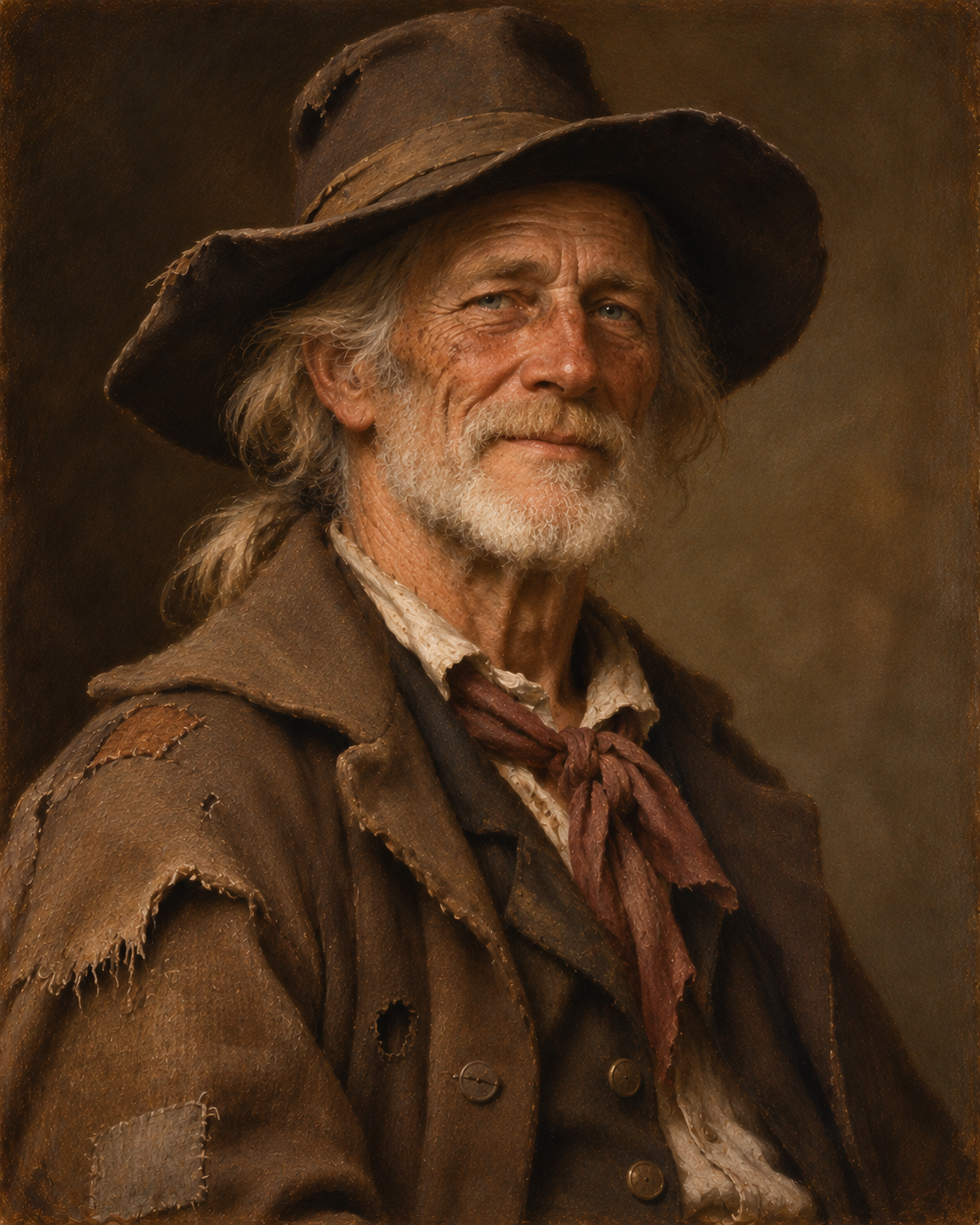
Portrait: The accompanying portrait is a modern artistic interpretation. It is not an authenticated contemporary likeness of Jacob Robbins.
Research status: This biography is based primarily on pension transcriptions and their identified archival source. Short quotations should be checked against the original manuscript images before publication as exact diplomatic transcriptions.