
Explore This Biography
His Story
John Hancock entered the American Revolution as a wealthy Boston merchant whose fortune had been built within the Atlantic trading system that British imperial officials sought to regulate. By 1775, he had become one of Massachusetts’s most prominent opponents of imperial policy and was chosen to preside over the Continental Congress.
His name is inseparable from the Declaration of Independence, but the celebrated signature represents only one episode in a long public career. Hancock helped organize resistance in Massachusetts, presided over Congress during the formation of the Continental Army, and later served as the first governor under the Massachusetts Constitution of 1780.
His public position depended in part on an unusual family history. After the death of his father, a Braintree minister, he was raised in the household of his prosperous uncle Thomas Hancock and trained in the family’s commercial enterprise. A surviving letter of June 14, 1763, written on behalf of Thomas Hancock & Company, shows him handling a transatlantic financial matter before he succeeded to the business in 1764.
The Revolution tested the loyalties and interests of merchants like Hancock. Disputes over customs enforcement, parliamentary taxation, and the authority of elected colonial assemblies gradually brought him into open conflict with royal officials. His prominence also made him a target of British attention during the crisis at Lexington in April 1775.
Hancock’s record was not confined to legislative halls. In 1778, he took a command role in the Massachusetts militia associated with the unsuccessful campaign against British-held Newport, Rhode Island. His later public career encompassed disputes over state finances, the aftermath of Shays’s Rebellion, and the ratification of the United States Constitution.
Early Life
A Minister’s Son in Braintree
John Hancock was born in Braintree, Massachusetts, in January 1737, the son of Reverend John Hancock Jr. and Mary Hawke. His father served as minister of Braintree’s North Precinct and died in 1744, when John was a child. The familiar date January 23, 1737, reflects the New Style calendar; some genealogical records use an Old Style date in January 1736.
John’s mother, Mary Hawke, had previously married Samuel Thaxter and later married Reverend Daniel Perkins in 1751. The family included John’s older sister Mary Hancock, later Mary Perkins, and his younger brother Ebenezer Hancock. A newspaper notice reported in the family research identifies their mother as living in 1798, although some compiled genealogies give an earlier death year.
The Household of Thomas and Lydia Hancock
After his father’s death, John was brought into the Boston household of his paternal uncle Thomas Hancock and Thomas’s wife Lydia Henchman Hancock. Thomas had developed a substantial mercantile enterprise through imported goods, exports, and military supply contracts. Later accounts sometimes describe John as legally adopted, but formal adoption has not been established from the documents examined for this biography.
Hancock graduated from Harvard College in 1754 and entered his uncle’s business. His training was practical as well as social. Overseas correspondence, credit, bills of exchange, customs obligations, and the management of commercial partnerships were central to Boston’s merchant economy.
Learning the Merchant Trade
Thomas Hancock’s commercial success rested on a network of Atlantic trade relationships. His business imported manufactured goods and exported commodities including rum, fish, and whale oil. Supply contracts connected the firm to British military operations during the colonial wars of the eighteenth century.
John Hancock entered this commercial world before inheriting control of the business. He learned to manage correspondence with overseas agents, arrange payments, and conduct transactions requiring cooperation among merchants and attorneys in different parts of the British Empire.
A Surviving Business Letter — June 14, 1763
An autograph letter attributed to John Hancock, written for Thomas Hancock & Company to attorney Samuel White, concerned the collection of money through London correspondents from parties in Scotland.
The firm requested a corrected legal authorization from Mr. Cuming before payment could be pursued. The document was described and transcribed in a University Archives auction catalog.
Examine the 1763 letter and catalog description
This document provides specific evidence of Hancock’s work in the merchant firm before Thomas died. It does not establish the terms of the later inheritance.
The Merchant Inheritance
Thomas Hancock died in 1764. John succeeded to the established merchant business and substantial commercial interests, becoming one of Boston’s wealthiest residents. The precise provisions of Thomas’s will have not been verified for this project, and no specific inheritance amount is asserted here.
The business was deeply embedded in the British Atlantic world. That background is essential to understanding why later disputes over trade regulation and customs enforcement affected Hancock both as a businessman and as a political figure.
Revolutionary War Service
From Commercial Protest to Political Leadership
The Sugar Act of 1764, Stamp Act of 1765, and Townshend duties intensified conflicts between colonial merchants and imperial authorities. Hancock became a Boston selectman in 1765 and served in the Massachusetts House of Representatives. He emerged as a prominent participant in organized opposition to parliamentary taxation and customs enforcement.
In 1768, British customs officers seized Hancock’s sloop Liberty on allegations involving customs violations. The seizure helped provoke a serious disturbance in Boston and became a major confrontation over the enforcement of imperial trade laws.
John Adams participated in Hancock’s legal defense. The existence of accusations does not establish that every allegation of smuggling was proven. The controversy nevertheless increased Hancock’s political visibility and demonstrated the growing antagonism between Boston merchants and royal customs officials.
The Provincial Congress and the Crisis of 1775
As royal government in Massachusetts broke down, Hancock was elected president of the Massachusetts Provincial Congress in October 1774.
In April 1775, Hancock and Samuel Adams were staying in Lexington when patriot messengers warned of British regulars advancing from Boston. Paul Revere was among those who carried the alarm. Hancock and Adams received the warning and moved to safety.
It is often said that the British expedition was sent specifically to arrest Hancock and Adams. Their political prominence is clear, but the precise objectives and orders for the expedition should not be reduced to that assertion without qualification.
President of the Continental Congress
In May 1775, delegates to the Second Continental Congress elected Hancock president. He presided through crucial decisions including the creation of the Continental Army, the appointment of George Washington as commander in chief, the movement toward independence, and the adoption of the Declaration of Independence in July 1776.
Hancock’s role as president was institutional and political. He was not the sole author of the Declaration, nor was he the commanding general of the Continental Army.
His distinctive signature on the engrossed Declaration made him one of its most recognizable signers. The principal signing of that document is generally dated August 2, 1776, rather than July 4.
He remained president of Congress until October 1777. In 1778, he also signed the Articles of Confederation. His Revolutionary career thus combined political authority, commercial resources, and occasional militia responsibilities.
Battles and Campaigns
Lexington and Concord — April 1775
On April 19, 1775, British regulars encountered Massachusetts militia at Lexington and later at Concord. Fighting at the North Bridge and along the British withdrawal route transformed the colonial political crisis into open warfare.
Hancock was staying in Lexington with Samuel Adams when the warning reached them. His documented connection to the events is as a prominent political leader who received the alarm, not as a combatant at Lexington Green or Concord’s North Bridge.
John Hancock’s Role
Location: Lexington, Massachusetts.
Participation: Received warning of British military movements.
Combat participation: Not established.
Historical significance: His presence helps explain the urgency of the patriot warning network.
The Rhode Island Campaign — August 1778
In 1778, American commanders planned an operation against British forces occupying Newport, Rhode Island. The expedition involved Continental troops, state militia, and an anticipated contribution from French naval forces.
Hancock participated in a leadership capacity with Massachusetts militia assembled for the campaign. The operation encountered substantial difficulties when naval developments, severe weather, and the departure of French ships disrupted American plans.
American forces commanded by Major General John Sullivan fought a defensive engagement on Aquidneck Island on August 29 before withdrawing from the island.
Hancock’s participation in the expedition should not be converted into an unsupported claim that he personally fought in the August 29 battle. The precise scope and dates of his field command require confirmation against original militia orders and correspondence.
John Hancock’s Role
Campaign: Rhode Island expedition, 1778.
Service: Massachusetts militia leadership.
Campaign result: British occupation of Newport continued.
Individual battlefield participation: Not established in the sources examined.
Political Offices and Recognition
Hancock’s most consequential offices were civilian. He presided over the Massachusetts Provincial Congress and the Continental Congress, and later served as governor of Massachusetts. These were political positions, not military decorations or hereditary titles.
In 1780, he became governor under the new Massachusetts Constitution, serving until 1785 and again from 1787 until his death in 1793.
He was also elected president of the Congress of the Confederation in 1785, but did not take his seat to preside over its proceedings.
His signature on the Declaration of Independence became his most enduring public symbol. His historical significance, however, rests on a broader record of revolutionary leadership, congressional administration, and state government.
Original Documents
1763 — Letter for Thomas Hancock & Company
A business letter to Samuel White, dated June 14, 1763, and attributed to Hancock’s hand, demonstrates his work in the family merchant firm.
1768 — The Liberty Affair
The customs seizure and related proceedings should be read alongside contemporary Boston records and the papers of John Adams. The seizure is well documented; individual allegations should not be treated as convictions.
1774–1777 — Provincial and Continental Congress
Records of the Massachusetts Provincial Congress and the Journals of the Continental Congress establish Hancock’s offices and the decisions made during his presidency.
His signature on the engrossed Declaration is an especially significant surviving public document.
1780–1793 — Massachusetts Governorship
Massachusetts constitutional, legislative, and executive records document Hancock’s governorship and the state’s political disputes after independence.
Hancock Family Papers II, 1740–1804
The Massachusetts Historical Society preserves a collection containing Hancock family correspondence, merchant records, and documents associated with the family’s public activities.
From His Account
Hancock’s surviving correspondence, speeches, and signed public documents offer direct evidence of his public positions. This section identifies documents without presenting invented quotations or conflating words adopted by a political body with Hancock’s personal authorship.
Boston Massacre Oration — March 5, 1774
Hancock delivered an anniversary oration in Boston that condemned standing armies and defended colonial liberties. Its published text is an important contemporary statement of the political arguments associated with him before independence.
Correspondence with Benjamin Franklin — June 30, 1783
In a surviving letter to Benjamin Franklin, Hancock discussed family matters and his health, including gout. The letter provides an opportunity to examine Hancock’s personal concerns through his own correspondence.
Read Hancock’s letter to Benjamin Franklin
Correspondence and Public Statements
Hancock’s name appears in correspondence involving Boston’s resistance movement and the Massachusetts House of Representatives. These documents help establish his participation in organized political opposition before the Revolution.
The distinction between signing a document, serving on a drafting committee, and personally composing its text remains important. Collective political statements should not automatically be presented as Hancock’s individual writings.
Public Service Record
| Period | Office or Activity | Documentation |
|---|---|---|
| 1765 | Boston selectman | Municipal office |
| 1766–1774 | Massachusetts House of Representatives | Colonial legislative service |
| October 1774 | Massachusetts Provincial Congress | Elected president |
| May 1775–October 1777 | Continental Congress | President |
| 1776 | Declaration of Independence | President of Congress and signer |
| 1778 | Articles of Confederation | Signer |
| August 1778 | Rhode Island expedition | Massachusetts militia leadership; precise battlefield role unverified |
| 1780–1785 | Massachusetts | Governor |
| 1785 | Congress of the Confederation | Elected president; did not preside |
| 1787–1793 | Massachusetts | Governor |
| 1788 | Massachusetts ratifying convention | Presiding officer; supported ratification with proposed amendments |
Hancock was principally a civilian political leader rather than an ordinary Continental Army enlisted soldier. No individual Revolutionary War pension application has been established in the materials examined.
Later Life and Burial
Governor of Massachusetts
Under the state constitution adopted in 1780, Hancock became Massachusetts’s first governor. His administrations faced the continuing costs of war, public debt, taxation, and the difficult transition from revolutionary mobilization to stable state government.
He resigned in 1785 but returned to office in 1787 after the upheaval associated with Shays’s Rebellion.
Ratification of the Federal Constitution
Hancock presided over the Massachusetts convention that considered the proposed federal Constitution in 1788.
His eventual support for ratification, accompanied by recommended amendments, was important in securing a narrow majority. The convention ratified the Constitution by a vote of 187 to 168.
The Death of His Children
Hancock’s personal life was marked by the deaths of both of his children. His daughter, Lydia Henchman Hancock, died in infancy in 1777. His only son, John George Washington Hancock, known as Johnny, died on January 27, 1787, at approximately eight years of age.
Later genealogical accounts associate Johnny’s death with an accident while skating on a frozen pond in Milton, Massachusetts. The accounts differ over whether he fell through the ice or suffered a fatal head injury. Without contemporary documentation, the precise circumstances remain uncertain.
The death of his son left Hancock and his wife, Dorothy Quincy, without surviving children. Although the wider Hancock family continued through John’s siblings and their descendants, the statesman left no surviving direct descendants.
Illness, Death, and Burial
Hancock experienced recurring ill health, including gout, during his later years. He died in Boston on October 8, 1793, while serving as governor.
He was buried in Boston’s Granary Burying Ground. His widow Dorothy survived him by more than thirty-six years, remarried in 1796, and died in 1830.
His Place in American History
Hancock’s large signature on the Declaration of Independence became one of the most familiar symbols of the American founding. Yet his career extended well beyond that document.
He was a merchant whose commercial interests were closely connected to the British Atlantic economy, a political leader who helped organize resistance to imperial authority, a congressional president during the movement toward independence, and a governor who participated in shaping the government of the new republic.
His life illustrates the changing responsibilities of the revolutionary generation as political opposition developed into independence and the challenges of governing an independent nation.
Family History
John Hancock was the son of a Massachusetts minister and later entered the household of his wealthy uncle Thomas Hancock. Explore his parents, guardians, marriage, children, siblings, and selected nieces and nephews. Some genealogical details remain under investigation.
His Parents
His Uncle and Aunt
His Marriage
His Children (2)
Born in Philadelphia during the American Revolution, Lydia was the first child of John Hancock and Dorothy Quincy. She died in infancy in 1777.
Individual biography not yet publishedJohn George Washington Hancock, affectionately known as Johnny, was the only son of John Hancock and Dorothy Quincy Hancock. Born in 1778, he was the younger brother of Lydia Henchman Hancock, who had died in infancy the previous year.
His name incorporated that of George Washington, commander in chief of the Continental Army and a prominent figure in the struggle for American independence.
Later genealogical accounts identify his birthplace as Fairfield, Connecticut, and give March 8, 1778, as his birth date. Other biographical accounts give May 17, 1778, in Boston. These conflicting details require confirmation from contemporary birth or baptismal records.
Johnny died on January 27, 1787, while his father was temporarily out of the Massachusetts governorship. He was approximately eight years old, approaching his ninth birthday.
According to later genealogical accounts, his death followed an accident while skating on a frozen pond in Milton, Massachusetts. One version states that he fell through the ice, while another attributes his death to a head injury sustained during the accident. The precise circumstances have not been established from contemporary evidence.
He is reported to have been buried in Boston’s Granary Burying Ground.
His death left John and Dorothy Hancock without surviving children. Their daughter Lydia had died in 1777, and the couple had no further children. Consequently, John Hancock left no surviving direct descendants.
Individual biography not yet publishedHis Siblings
John’s older sister, born April 8, 1735, in Braintree. Married Richard Perkins on October 9, 1760, in Bridgewater, Massachusetts.
Published genealogical accounts identify twelve children. Mary died June 21, 1779, and was buried at West Bridgewater.
Reported children:
- Daniel Perkins (born 1761)
- Mary Perkins (born 1763)
- Ann Perkins (born 1764)
- Richard Perkins (born 1766)
- Sarah Perkins Packard (born 1767)
- John Hancock Perkins (born 1769)
- Lydia Henchman Perkins Spear (born 1770)
- Elizabeth Perkins Withington (born 1771)
- William Perkins (born 1773)
- Lucy Hancock Perkins Spear (born 1775)
- Foster Perkins (born 1777)
- George Washington Perkins (born 1778)
The twelve-child list is drawn from published genealogy and has not been independently verified child by child.
Individual biography not yet publishedJohn’s younger brother, born November 15, 1741, Old Style, in Braintree. Graduated from Harvard College in 1760.
Married Elizabeth Lowell on June 7, 1767. Genealogical accounts identify him as a deputy paymaster during the American Revolution under William Palfrey.
Some family compilations call him General Ebenezer Hancock, but that rank has not been verified from original military records.
Reported children:
- Thomas Hancock (1769–1841)
- George Washington Hancock (1776–1793)
- John Hancock (1772; died in infancy)
- John Hancock (1774–1859)
- Hannah Hancock Glines
The children’s names and relationships require individual vital-record verification.
Individual biography not yet publishedExplore the Next Generation
Research note: John Hancock left no surviving direct descendants through his own children. His extended family continued through his siblings. This directory draws upon Massachusetts vital records, published genealogical research, and family profiles. Some dates and relationships require further verification against original records.
Original Sources
The following documentary collections, historical records, and published studies form the research foundation for this biography. Original documents are distinguished from later historical interpretation and genealogical compilations.
Primary and Institutional Sources
- Massachusetts Historical Society. Hancock Family Papers II, 1740–1804, Ms. N-169. View collection guide.
- John Hancock. Letter written for Thomas Hancock & Company to Samuel White, June 14, 1763. University Archives auction catalog. View catalog description and transcription.
- John Hancock to Benjamin Franklin. June 30, 1783. National Archives, Founders Online. Read correspondence.
- Boston Committee of Correspondence. Letter to John Wilkes, November 4, 1769. National Archives, Founders Online. View document.
- Massachusetts House of Representatives. Address of June 7, 1770. National Archives, Founders Online. View document.
- National Archives. Declaration of Independence. View founding document.
- Journals of the Continental Congress. Official congressional proceedings during Hancock’s presidency.
Genealogical Research
- History of the Town of Hingham, Massachusetts. 1893, volumes II–III. Used as a genealogical reference for Mary Hawke and her family.
- Robert M. Sherman and others. Mayflower Families Through Five Generations, volume 15. General Society of Mayflower Descendants, 1997. Relevant to Mary Hancock Perkins and her descendants.
- Massachusetts town and vital records, marriage indexes, and published family genealogies for the Hancock, Hawke, Quincy, and Perkins families.
- Ellen C. D. Q. Woodbury. Dorothy Quincy, Wife of John Hancock, with Events of Her Time. 1905.
- H. Hobart Holly. Descendants of Edmund Quincy 1602–1637. Quincy Historical Society, 1977.
- Clifford K. Shipton. Sibley’s Harvard Graduates. Relevant volumes covering Reverend John Hancock Jr. and John Hancock.
- WikiTree. John George Washington Hancock (1778–1787). Genealogical profile reporting a skating accident in Milton, Massachusetts. The profile contains conflicting descriptions of the accident and relies on a secondary genealogical reference rather than a contemporary death record.
Historical Studies
- Brooke Barbier. King Hancock: The Radical Influence of a Moderate Founding Father. 2023.
- Massachusetts Historical Society. Hancock family manuscript collections and related archival research guides.
- Published documentary editions of the papers of John Adams and Benjamin Franklin, including records involving John Hancock.
Historical Research Note
Documentary interpretation: This biography distinguishes surviving manuscripts, institutional historical records, published documentary editions, later genealogical compilations, and historical inference.
The 1763 merchant letter: The letter to Samuel White is attributed to John Hancock by the University Archives auction catalog. Its original manuscript has not been independently examined for this project.
Thomas Hancock’s estate: Thomas Hancock’s will has not been examined. The precise terms of John’s inheritance and any claim of formal legal adoption have not been independently established.
Revolutionary War service: Hancock’s principal role during the Revolution was political leadership. His connection to the Rhode Island expedition of 1778 should be distinguished from unsupported claims of personal battlefield participation.
The Declaration of Independence: Congress adopted the Declaration on July 4, 1776. The principal signing of the engrossed parchment occurred on August 2. The two events should not be confused.
Death of John George Washington Hancock: Later genealogical accounts report that Hancock’s only son died following a skating accident in January 1787. These accounts disagree about the circumstances of the accident and the child’s exact birth date and birthplace. The date of death, January 27, 1787, is consistently reported, but the circumstances require verification through contemporary records.
Genealogy: Some genealogical compilations disagree about Mary Hawke’s death year, Dorothy Quincy’s age at death, and Ebenezer Hancock’s military title. A reported contemporary newspaper notice supports Mary’s death in 1798, but the original notice has not been independently checked.
Family descendants: John Hancock’s two children died young. His siblings’ families continued into later generations. The extended family directory uses published genealogical information that has not been independently verified for every individual.
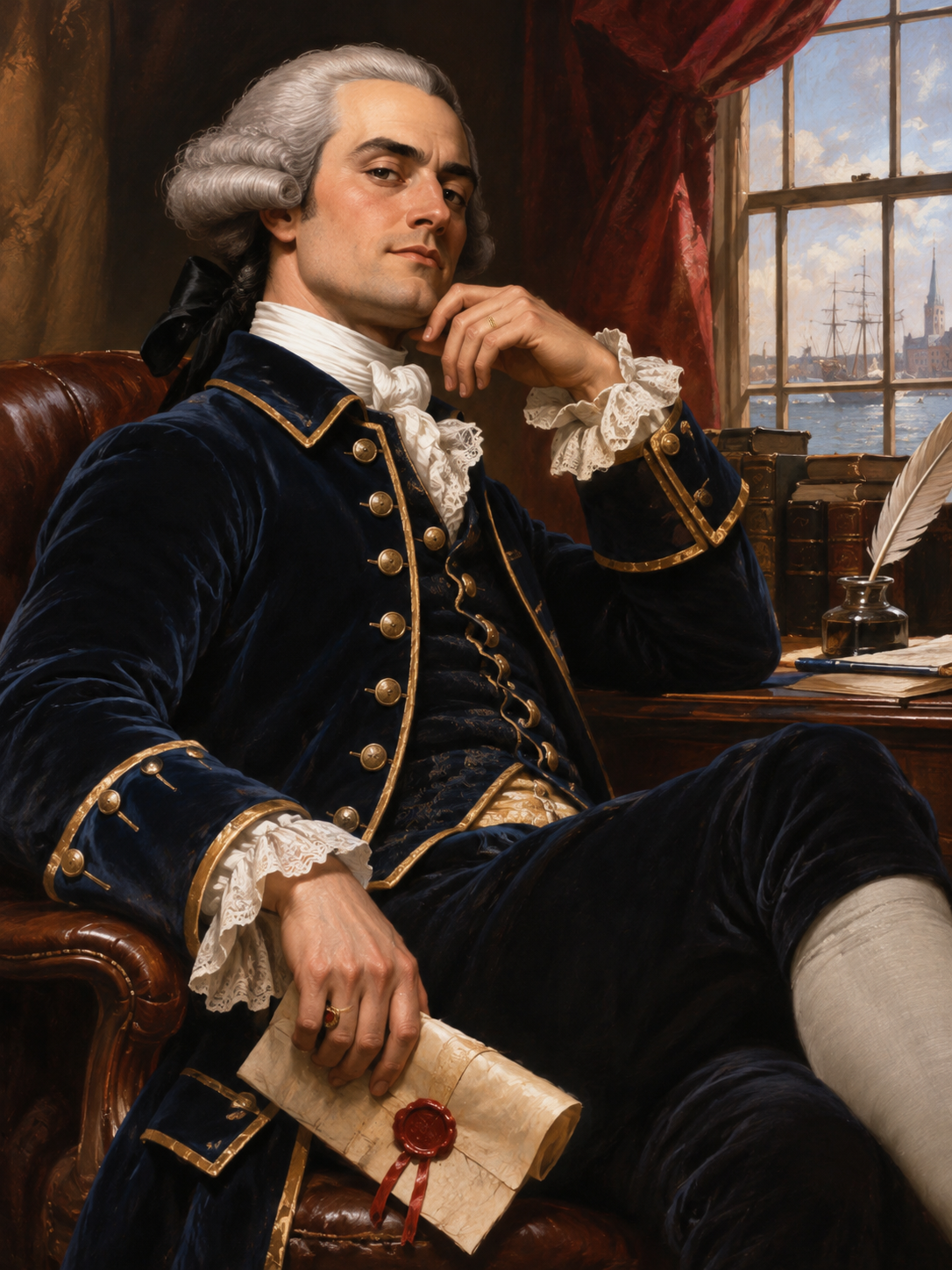
Illustration: The infobox image, “Revolutionary-Era Statesman at His Desk,” is a modern artistic reconstruction used by The Yost Post. It is not an authentic eighteenth-century portrait.
Research status: This biography is a historical synthesis based on the sources identified above. Original manuscripts, military records, family vital records, and archival references should be checked individually before the article is regarded as fully verified.