
In This Article
His Story
On June 17, 1775, Joseph Warren stood among the American defenders of Breed’s Hill as British regulars advanced toward their hastily constructed fortifications. Only three days earlier, the Massachusetts Provincial Congress had appointed him a major general. Yet Warren had chosen to fight alongside ordinary provincial soldiers rather than take command of the battlefield. Before the day ended, the British would capture the American position, and Warren would be dead at thirty-four years old.
His death came at the end of an extraordinary two months. On April 18, Warren had helped initiate the alarm that warned Massachusetts of British troops marching toward Concord. On April 19, he personally entered the fighting as those troops retreated toward Boston. In the weeks that followed, he helped organize the provincial army, support the siege of Boston, and authorize military operations extending as far as Fort Ticonderoga.
Warren was neither a career soldier nor an experienced battlefield commander. He was a Boston physician whose political responsibilities had become military responsibilities as resistance to British authority turned into open war. His significance lay in his ability to organize intelligence, communicate with militia leaders, and help transform a provincial uprising into an organized armed resistance.
At Bunker Hill, however, Warren was no longer directing events from a committee room. He entered a position already under British attack, where exhausted defenders were trying to hold off professional troops with limited ammunition. His death during the final assault made him one of the Revolution’s earliest and most prominent fallen leaders.
Early Life
Joseph Warren was born in Roxbury, Massachusetts, on June 11, 1741, the eldest son of Joseph Warren and Mary Stevens Warren. His father was a respected farmer, and the family placed considerable value on education. Warren attended Roxbury Latin School before entering Harvard College at fourteen, graduating in 1759.
After completing his education, Warren studied medicine under Dr. James Lloyd of Boston. He established his own medical practice in 1763 and became known for treating patients from different social and economic backgrounds. During the smallpox outbreaks of the period, he participated in inoculation efforts and provided care to patients who could not afford his services.
His medical practice brought him into contact with influential Bostonians, including John Adams, John Hancock, and Samuel Adams. He also developed a close association with Paul Revere through Boston’s Patriot circles and Freemasonry.
Warren married Elizabeth Hooton in 1764. The couple had four children before Elizabeth’s death in 1773. Warren was therefore a widower with young children when the Revolutionary War began.
His political involvement increased during the disputes over parliamentary taxation and British military occupation. He wrote essays criticizing British policy, delivered public addresses commemorating the Boston Massacre, and became associated with the Suffolk Resolves of 1774. By early 1775, Warren had become a leading figure in the Massachusetts Provincial Congress and Committee of Safety.
Revolutionary War Service
The Lexington Alarm: April 18, 1775
By April 1775, Warren had become one of the central figures in Boston’s Patriot intelligence network. British troops occupied the town, while provincial leaders outside Boston were collecting weapons, ammunition, and military supplies in preparation for a possible confrontation.
On April 18, Warren received information that British regulars were preparing an expedition toward Concord. General Thomas Gage intended to seize provincial military supplies, while Samuel Adams and John Hancock were staying in nearby Lexington.
Warren acted before the British column could reach its destination. He dispatched Paul Revere across the Charles River toward Charlestown and William Dawes along the land route through Boston Neck. The two men traveled by different routes to warn Adams and Hancock and help alert the surrounding militia companies.
The separate routes were important. If one messenger was intercepted, the other might still carry the warning. The operation also relied on a wider network of riders, local militia officers, and alarm signals that could spread the news through Massachusetts.
Warren’s decision did not create the provincial militia system, but it helped activate that system at a critical moment. The warning gave local companies time to assemble and helped ensure that the British expedition would encounter an increasingly mobilized countryside.
Historians have debated the identity of Warren’s informant. One theory identifies Margaret Gage, wife of the British commander, but no surviving contemporary evidence conclusively establishes her role. Warren’s broader intelligence network and the observable preparations of British troops remain important parts of the explanation.
Lexington and Concord: April 19, 1775
Warren was not present when the first shots were fired on Lexington Green. His personal participation came later, as British troops withdrew from Concord toward Boston.
By then, the expedition had encountered provincial resistance at Concord’s North Bridge. Militia companies were assembling along the return route, and the British column faced repeated attacks as it moved eastward.
The Patriots used the countryside to their advantage. Rather than attempting to stand in one continuous line against British regulars, many militia companies occupied stone walls, buildings, wooded ground, and other positions overlooking the road. They fired upon the retreating troops and moved as the column advanced.
The British responded by deploying flank guards, attempting to clear threatening positions, and maintaining organized formations wherever possible. Reinforcements under Lord Percy eventually helped the battered column continue toward Boston.
Warren left Boston and joined the fighting during the retreat. Historical accounts place him alongside General William Heath, who was helping coordinate provincial forces in the Menotomy area.
According to a frequently repeated account, a British musket ball passed close enough to Warren’s head to strike the pin holding his hair in place. The incident was later remembered as a narrow escape from death, although the precise circumstances cannot be independently reconstructed.
For Warren, April 19 marked the transition from organizing armed resistance to personally participating in combat. He had helped send the warning that mobilized the countryside; now he was fighting alongside the men who had answered it.
Organizing the Siege of Boston
After Lexington and Concord, provincial militia forces surrounded British-occupied Boston. Thousands of men had assembled, but the emerging army faced serious problems involving supplies, military organization, ammunition, and command.
Warren’s position in the Provincial Congress and Committee of Safety placed him at the center of efforts to address these problems. He participated in organizing military resources, maintaining communications, and preparing Massachusetts for a conflict that was rapidly becoming more than a local confrontation.
He also helped communicate Massachusetts’s military situation to the Continental Congress. In May 1775, provincial correspondence described the size and needs of the forces surrounding Boston and requested broader assistance.
Warren, Benedict Arnold, and Fort Ticonderoga
Warren’s military responsibilities extended beyond the immediate Boston campaign. Before the fighting began, Patriot emissary John Brown had reported that Fort Ticonderoga on Lake Champlain should be seized if hostilities broke out.
The fort held artillery that could prove valuable to the Americans. The provincial forces surrounding Boston had limited heavy weapons and little ability to manufacture additional cannon.
After Lexington and Concord, Benedict Arnold approached Massachusetts authorities with a proposal to capture Ticonderoga. Warren supported the operation through the Committee of Safety, and Arnold received authorization to raise troops and attempt to seize the fort.
Massachusetts supplied the expedition with approximately two hundred pounds of gunpowder, a valuable commodity already in short supply. Meanwhile, a separate effort involving Ethan Allen and the Green Mountain Boys was moving toward the same objective.
The two initiatives converged at Ticonderoga, which fell to Patriot forces on May 10, 1775.
Warren was not personally present at the capture. His contribution was organizational and strategic: he supported an operation intended to obtain British artillery and weaken an important British position.
Later historians have questioned whether the gunpowder supplied to Arnold might have been more useful around Boston. That possibility is worth considering, particularly in light of the ammunition shortage at Bunker Hill, but there is no evidence proving that the same powder would otherwise have reached the defenders of Breed’s Hill.
Appointment as Major General
On June 14, 1775, the Massachusetts Provincial Congress appointed Warren a major general in the provincial forces.
The appointment recognized his importance in organizing Massachusetts resistance. Nevertheless, Warren had limited experience commanding troops in battle. Three days later, he would enter the fighting at Charlestown without taking charge of the American defense.
Battles and Campaigns
The Battle of Bunker Hill: June 17, 1775
During the night of June 16, approximately twelve hundred provincial soldiers moved onto the Charlestown peninsula and began constructing fortifications. Although the operation was associated with Bunker Hill, the principal redoubt was built on Breed’s Hill, closer to Boston and directly threatening British positions across the water.
The Americans worked through the night, digging earthworks and strengthening their defenses with whatever materials were available. By morning, British commanders could see the new fortification and recognized that the position could become increasingly difficult to capture if the provincials were allowed to strengthen it.
British artillery began bombarding the American position. The defenders continued working despite the danger, but many were exhausted after a night without sleep and had limited food and water.
Warren Arrives at the American Position
Warren learned that British troops had landed at Charlestown and traveled toward the American defenses. Accounts describe him arriving as provincial soldiers were preparing to meet the attack.
Although Warren had recently been appointed a major general, he did not assume command. General Israel Putnam and Colonel William Prescott were already involved in directing the defense. Later accounts state that Warren declined offers to command, believing the officers present possessed greater battlefield experience.
He joined the defenders of the redoubt as a volunteer.
From the American position, Warren would have been surrounded by the conditions described in contemporary battlefield accounts: British infantry advancing across the hillside, artillery firing toward the earthworks, smoke drifting across the battlefield, and Charlestown burning nearby. These conditions are documented, although Warren’s precise observations and movements cannot be reconstructed.
How the Patriots Defended the Hill
The American defense depended on the redoubt, adjoining breastworks, and a fortified line extending toward the Mystic River.
Prescott’s troops occupied the principal earthworks on Breed’s Hill. Other provincial forces, including New Hampshire soldiers under John Stark, defended a rail-fence position intended to prevent British troops from moving around the American left flank.
The Patriots faced a serious disadvantage in ammunition and equipment. Their force consisted largely of militia companies with different levels of training and supplies. Many lacked bayonets, making it difficult to resist British regulars if the fighting reached close quarters.
The defenders therefore relied on their fortifications and carefully controlled musket fire.
Officers instructed soldiers to conserve ammunition until the advancing British came within effective range. The objective was to deliver concentrated volleys at close distance, when musket fire could inflict the greatest damage.
Why the First Two British Assaults Failed
British troops under General William Howe advanced toward the American works while light infantry attempted to move along the Mystic River shoreline and threaten the American flank.
The terrain proved difficult. Tall grass concealed rocks and uneven ground, while fences and stone walls disrupted the British formations. Advancing uphill in close order exposed the regulars to fire from defenders who were partially protected by earthworks.
When the Americans opened fire, the British suffered severe casualties. Officers were particularly vulnerable because their uniforms and positions made them recognizable among the advancing troops.
The British attack along the Mystic River was stopped by the provincial defenders of the rail-fence line. Meanwhile, concentrated fire from the redoubt and breastworks forced the main British assault to withdraw.
Howe reorganized his troops and attacked again. The second assault also failed under heavy American musket fire.
The Americans had demonstrated that their fortifications and controlled volleys could stop professional British infantry. Yet every successful defense consumed more of their limited ammunition.
Why the Patriots Ran Out of Gunpowder
The shortage of ammunition at Bunker Hill was rooted in the larger logistical problems facing the provincial army.
The forces surrounding Boston had assembled rapidly after Lexington and Concord, but they lacked a reliable system for supplying a large army. Gunpowder was scarce throughout the colonies, and Massachusetts possessed limited reserves.
The troops sent to fortify Breed’s Hill had carried only the ammunition available to their units. They had established their position during the night without a dependable supply line capable of sustaining repeated major assaults.
The first two British attacks required substantial musket fire. Although American officers tried to conserve ammunition by delaying their volleys, defending against successive attacks steadily exhausted their powder and musket balls.
Resupply was also difficult. British naval and artillery fire threatened movement across Charlestown Neck, the narrow connection between the peninsula and the American positions farther inland.
As the battle continued, the men defending the redoubt could not count on receiving fresh ammunition. By the time the British prepared their final attack, many Americans had only a few shots remaining, while others had exhausted their supplies entirely.
The Final British Assault
After two costly failures, the British altered their tactics.
Artillery was repositioned to direct grapeshot against the American defenses. British infantry advanced in more widely spaced formations and concentrated pressure against the redoubt and adjoining breastworks.
The revised attack reduced some of the disadvantages British troops had faced during their earlier advances. More importantly, the Americans were now less capable of maintaining the concentrated musket fire that had stopped the first two assaults.
As the British approached, American firing became increasingly irregular. The defenders were running out of powder and shot, and their ability to stop the advance diminished.
British regulars with fixed bayonets reached the earthworks and climbed over the parapet. Inside the redoubt, the fighting became a violent struggle at close quarters.
Some Americans threw stones or swung empty muskets as clubs. Others attempted to withdraw as the British entered their position.
The defenders could no longer hold the redoubt. The British captured the fortification, and surviving provincial troops retreated toward Charlestown Neck.
The Death of Joseph Warren
Warren remained among the American defenders during the final British assault. As the position collapsed, he was struck in the face by a bullet and killed.
The National Park Service describes Warren confronting the advancing British before the fatal shot. Other historical accounts place the wound beneath his left eye and describe him remaining near the withdrawing defenders.
Some later narratives claim that a British officer recognized Warren and deliberately shot him with a pistol. The identity of the shooter and the precise weapon cannot be established with certainty.
Warren died six days after his thirty-fourth birthday. His major general’s commission was only three days old.
The British captured the American position but suffered exceptionally heavy casualties. Approximately 1,054 British soldiers were killed or wounded, while American casualties exceeded four hundred.
For the Americans, the battle was a tactical defeat but demonstrated that provincial soldiers could withstand repeated assaults by British regulars when fighting from prepared defenses.
Warren’s death also deprived Massachusetts of one of the most important figures in organizing the resistance.
Military Rank and Recognition
Warren’s highest military rank was major general in the Massachusetts provincial forces, conferred June 14, 1775. He did not command the American army at Bunker Hill and should not be described as a Continental Army major general.
His decision to join the defenders without taking command became an important part of his reputation. Contemporary and later writers portrayed him as a political leader willing to share the dangers faced by ordinary soldiers.
His death was widely mourned. John Trumbull later commemorated the event in The Death of General Warren at the Battle of Bunker’s Hill, a historical painting that became one of the best-known images of the Revolution.
The painting is a commemorative interpretation rather than an eyewitness record of Warren’s final moments.
Monuments and memorials subsequently honored Warren at Charlestown, Boston, and elsewhere. His military importance, however, rests on his documented contributions to the Patriot intelligence network, provincial military organization, and the opening battles of the Revolution.
Original Documents and Testimony
Massachusetts Provincial Congress — April 26, 1775
Following Lexington and Concord, the Massachusetts Provincial Congress prepared an address to the inhabitants of Great Britain explaining the events that had brought the colonies into armed conflict.
Warren signed the address in his capacity as president of the Provincial Congress. The document illustrates his role in communicating Massachusetts’s account of the fighting beyond the colony.
Massachusetts Provincial Congress to Benjamin Franklin — April 26, 1775
The Provincial Congress requested assistance in circulating its account of Lexington and Concord in Britain. The correspondence provides evidence of Warren’s political and diplomatic responsibilities immediately after the fighting.
Massachusetts Provincial Congress to the Continental Congress — May 3, 1775
A letter signed by Warren as president described the expanding Massachusetts military establishment and its need for financial and military assistance.
The correspondence provides contemporary evidence of his administrative responsibilities during the siege of Boston.
Joseph Warren’s Letter — June 13, 1775
Four days before his death, Warren signed correspondence concerning relations with Canada and the Six Nations, including concerns about British official Guy Johnson.
The surviving letter demonstrates that Warren’s responsibilities extended beyond the immediate Boston theater.
View the original letter at the Smithsonian National Postal Museum
John Adams to Joseph Warren — June 21, 1775
John Adams wrote to Warren from Philadelphia four days after the Battle of Bunker Hill, apparently unaware that Warren had been killed.
The letter was subsequently read by James Warren, a fellow Patriot who was not Joseph Warren’s brother.
Benjamin Hichborn to John Adams — November–December 1775
Benjamin Hichborn reported allegations that British naval officer James Drew had disturbed Warren’s grave and desecrated his remains.
Hichborn attributed the information to two men serving aboard HMS Preston. He was reporting what others told him, not describing conduct he personally witnessed.
From His Account
Warren did not survive the Revolution to prepare a military memoir or pension declaration. His own surviving words are found in political addresses, correspondence, and official documents issued during his leadership of the Massachusetts Provincial Congress.
Massachusetts’s Commitment to the War
In correspondence to the Continental Congress shortly before his death, Warren expressed Massachusetts’s determination to remain committed to the American cause:
“At all times be ready to spend and be spent in the cause of America.”
Reported from Warren’s provincial correspondence; the wording should be checked against the original manuscript before being used as a stand-alone archival quotation.
The Famous Declaration to His Mother
A later historical tradition attributes the following declaration to Warren after his narrow escape during the fighting on April 19:
“I will either set my country free or shed my last drop of blood to make her so.”
This is a later reported quotation, not a verified surviving letter written by Warren. It should be understood as part of the historical tradition surrounding his character and determination.
Military Service Record
| Date | Service or Event | Historical Record |
|---|---|---|
| 1774–1775 | Massachusetts Committee of Safety and provincial military preparations | Provincial political and military records |
| April 18, 1775 | Dispatched Paul Revere and William Dawes | Historical accounts of the Lexington Alarm |
| April 19, 1775 | Participated in fighting during the British retreat from Concord | Historical accounts associated with General William Heath |
| April–May 1775 | Helped organize the siege of Boston | Massachusetts Provincial Congress records |
| April–May 1775 | Supported Benedict Arnold’s expedition against Fort Ticonderoga | Committee of Safety and expedition orders |
| June 14, 1775 | Appointed major general | Massachusetts provincial commission |
| June 17, 1775 | Fought and died at Breed’s Hill | Battlefield accounts and contemporary correspondence |
Death, Recovery, and Burial
The British Treatment of Warren’s Body
When British troops captured the American redoubt at Breed’s Hill, Warren’s body remained on the battlefield.
British soldiers stripped his remains and buried him with other American dead. An account attributed to British officer Walter Laurie describes Warren’s burial in contemptuous language, reflecting the hostility directed toward one of Massachusetts’s leading Patriot organizers.
More disturbing allegations appeared in correspondence written during the war.
In a letter to John Adams begun November 25, 1775, and continued the following month, Benjamin Hichborn reported that Royal Navy Lieutenant James Drew had returned to Warren’s burial place after the battle.
According to Hichborn, Drew uncovered the grave, spat upon Warren’s face, trampled his body, and severed his head. Hichborn stated that two men serving aboard HMS Preston had witnessed the conduct and supplied the information.
The letter is an important contemporary source, but Hichborn was repeating the testimony of others rather than describing events he personally witnessed. The precise extent of the damage inflicted upon Warren’s remains cannot be established from this correspondence alone.
The Recovery of Warren’s Remains
Following the British evacuation of Boston in March 1776, Warren’s family and associates began searching for his remains.
Among those involved was Paul Revere, who had previously performed dental work for Warren.
Revere recognized a distinctive dental prosthesis made of ivory and gold wire that replaced Warren’s upper left canine and first premolar.
According to the National Museum of Health and Medicine, the identification represents the first American instance of a military service member being identified through dental remains.
Funeral and Final Burial
Warren received a formal funeral in April 1776 and was initially buried at Boston’s Granary Burying Ground.
His remains were later transferred to St. Paul’s Church and subsequently to Forest Hills Cemetery in Jamaica Plain, Boston.
Forest Hills Cemetery remains his final resting place. Memorials at Bunker Hill and elsewhere commemorate his death but are not his burial site.
Family & Descendants
His Parents
His Wife
His Children (4)
Warren’s eldest daughter. Later genealogical accounts identify her with the Welles family. Her marriage and precise life dates require original-record verification.
Individual biography not yet publishedSon of Joseph and Elizabeth Warren. Later genealogical compilations report that he died young; the precise dates require verification.
Individual biography not yet publishedDaughter of Joseph and Elizabeth Warren. Later genealogical sources associate her with the Lyman and Newcomb families, but the complete marriage history requires documentary confirmation.
Individual biography not yet publishedYoungest child of Joseph and Elizabeth Warren. His precise birth and death dates remain to be confirmed from original family records.
Individual biography not yet publishedHis Brothers
One of Joseph Warren’s younger brothers. His reported life dates should be checked against contemporary family and vital records.
Individual biography not yet publishedYounger brother of Joseph Warren. Family accounts place him among those involved in the recovery of Joseph’s remains after the British evacuation.
Individual biography not yet publishedPhysician and younger brother of Joseph Warren. John became an important figure in Boston medicine and participated in efforts to recover and preserve his brother’s remains and memory.
Individual biography not yet publishedJoseph Warren’s family relationships are drawn from historical biographical and genealogical accounts. Exact dates, marriages, and descendant lines should be verified through original family, church, probate, and vital records before being presented as definitive.
Original Sources & Historical Note
- Massachusetts Provincial Congress. Address to the inhabitants of Great Britain, April 26, 1775. Contemporary manuscript signed by Joseph Warren as president.
- Massachusetts Provincial Congress to Benjamin Franklin. April 26, 1775. National Archives document.
- Massachusetts Provincial Congress to the Continental Congress. May 3, 1775. Contemporary provincial correspondence signed by Warren.
- Joseph Warren. Letter of June 13, 1775. Smithsonian National Postal Museum.
- John Adams to Joseph Warren. June 21, 1775. Founders Online, National Archives.
- Benjamin Hichborn to John Adams. November–December 1775. Founders Online, National Archives.
- National Park Service. Joseph Warren: The Sacrifice that Rallied a Nation.
- National Museum of Health and Medicine. Major General Joseph Warren and Paul Revere.
- American Battlefield Trust. Battle of Bunker Hill.
- Tony Horwitz. “The True Story of the Battle of Bunker Hill,” Smithsonian Magazine, May 2013.
- John Krueger. “Joseph Warren, Patriot Martyr,” Lake Champlain Basin Program, June 17, 2022.
- Christian Di Spigna. Founding Martyr: The Life and Death of Dr. Joseph Warren, the American Revolution’s Lost Hero, 2018.
- David Hackett Fischer. Paul Revere’s Ride, 1994.
- Nathaniel Philbrick. Bunker Hill: A City, a Siege, a Revolution, 2013.
This biography distinguishes Warren’s documented military responsibilities from later traditions surrounding his death. His role in the Lexington Alarm, provincial military organization, appointment as major general, and death at Breed’s Hill are established historical events.
Descriptions of British tactics and the American ammunition shortage are based on historical battlefield research and contemporary accounts. They describe the conditions Warren encountered but do not establish his exact position or personal observations during every phase of the battle.
Accounts identifying Warren’s killer, describing the precise circumstances of the fatal shot, and alleging mutilation of his remains require careful attribution. Benjamin Hichborn’s correspondence is contemporary evidence that accusations of postmortem abuse circulated during the war, but it is not his personal eyewitness testimony.
Family relationships and dates drawn from later genealogical compilations should be checked against original records before definitive descendant lines are published.
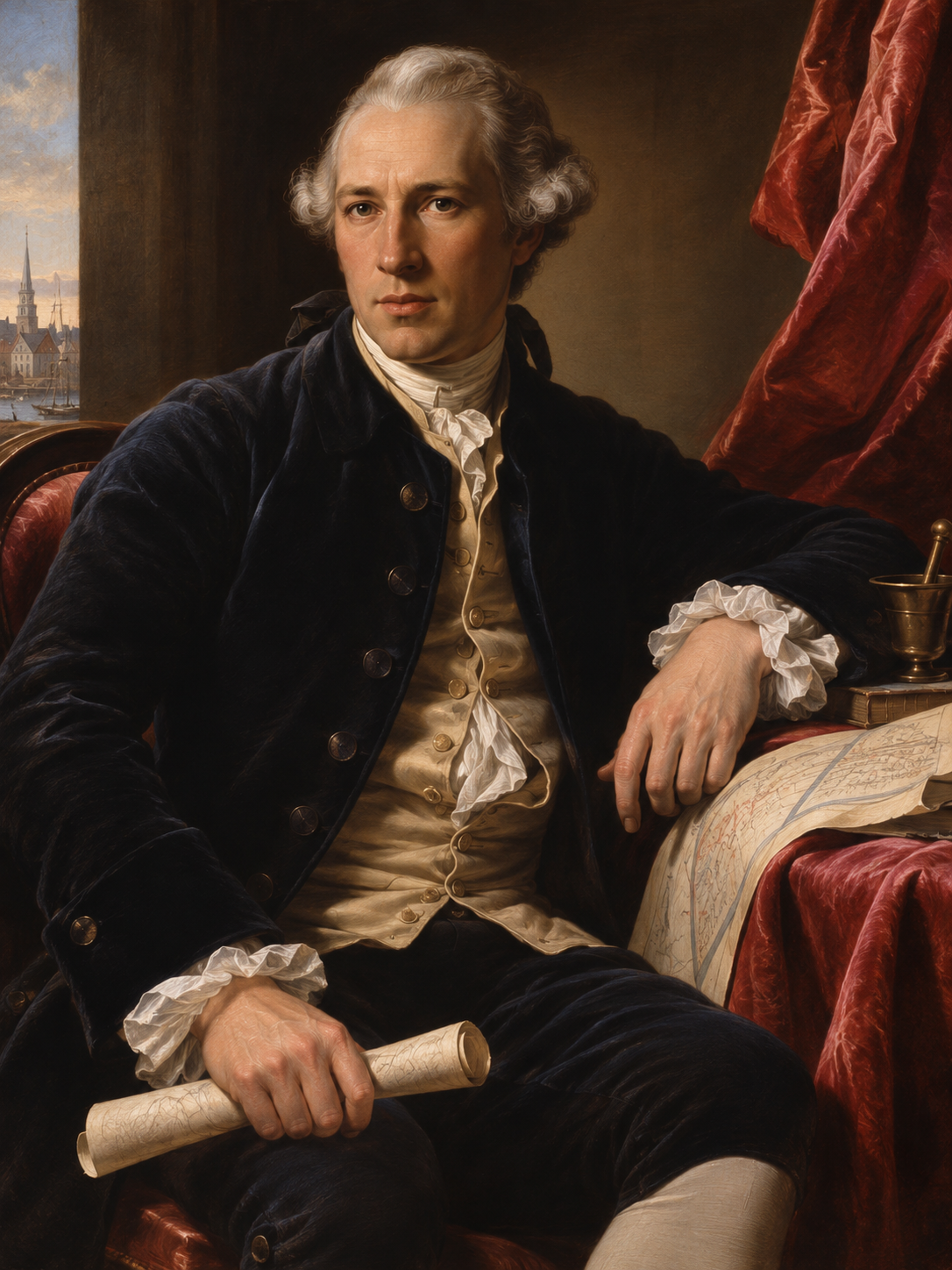
The AI-generated portrait accompanying this biography is an artistic historical interpretation, not an authenticated contemporary likeness of Joseph Warren.